


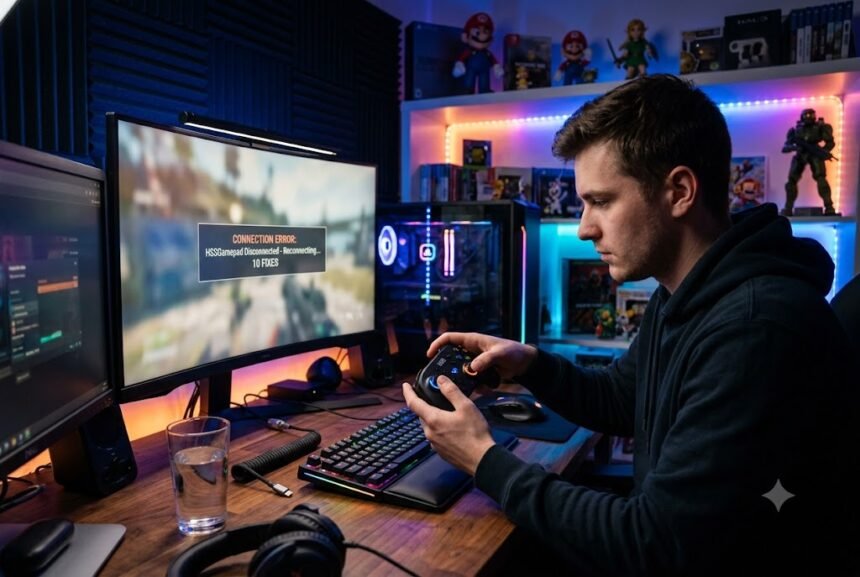
Connectivity Issues HSSGamepad can quickly ruin an otherwise enjoyable gaming session. Whether your controller suddenly disconnects, fails to pair, experiences input delays, or stops responding completely, connection problems can prevent smooth gameplay and create frustrating interruptions.
- What Causes Connectivity Issues HSSGamepad Controllers?
- How to Identify HSSGamepad Connection Problems
- Fix 1: Restart Your Gaming Device and HSSGamepad Controller
- Fix 2: Re-Pair Your HSSGamepad Bluetooth Connection
- Fix 3: Check Wireless Interference Around Your Gaming Setup
- Why Stable Controller Connectivity Matters for Gaming Performance
- Advanced Fixes for Connectivity Issues HSSGamepad
- Fix 4: Update HSSGamepad Drivers and System Drivers
- Fix 5: Update HSSGamepad Firmware
- Fix 6: Test the USB Cable and Connection Port
- Fix 7: Disable Power Saving Settings That Disconnect Controllers
- Fix 8: Check Controller Compatibility With Your Gaming Platform
- Fix 9: Reset HSSGamepad Controller Settings
- Fix 10: Reduce Input Lag and Improve Wireless Performance
- Common HSSGamepad Connection Questions Answered
- Expert Tips to Prevent Future Connectivity Issues HSSGamepad
- Keep Your HSSGamepad Firmware and Software Updated
- Maintain Proper Battery Health for Wireless Gaming
- Organize Your Gaming Setup to Improve Wireless Performance
- Advanced Troubleshooting: Testing HSSGamepad on Another Device
- Recommended Maintenance Schedule for Long-Term Performance
- Frequently Asked Questions About Connectivity Issues HSSGamepad
- Final Thoughts: Solving Connectivity Issues HSSGamepad Successfully
Modern gaming controllers rely on technologies such as Bluetooth, wireless adapters, USB connections, firmware systems, and device drivers. When any part of this connection chain fails, users may experience unstable performance, random disconnections, or complete controller detection failures.
HSSGamepad users commonly report issues caused by outdated drivers, incorrect pairing procedures, interference from other wireless devices, battery problems, or compatibility conflicts with gaming platforms. Fortunately, most connection problems can be solved with systematic troubleshooting.
This guide explains the most effective ways to fix Connectivity Issues HSSGamepad, improve controller stability, and restore a reliable gaming experience without unnecessary replacements.
What Causes Connectivity Issues HSSGamepad Controllers?
Before applying fixes, it is important to understand why connection failures happen. A gaming controller does not communicate with a device through a single component. Instead, it depends on multiple hardware and software layers working together.
A weak Bluetooth signal, damaged cable, outdated firmware, or incorrect system settings can interrupt communication between the HSSGamepad controller and your gaming device.
Some common causes include:
Bluetooth Pairing Errors
Wireless controllers often depend on Bluetooth pairing to establish communication. If the previous connection information becomes corrupted, the controller may appear connected but fail to send inputs correctly.
Removing the old pairing record and reconnecting the device can often solve this issue.
Low Battery or Power Problems
Many users overlook battery levels when troubleshooting wireless controller issues. A controller with insufficient power may repeatedly disconnect, experience delayed responses, or fail during startup.
Using fully charged batteries or connecting the controller through USB charging can help determine whether power is the underlying problem.
Outdated Drivers or Firmware
Controller firmware and operating system drivers play an important role in maintaining compatibility. When updates are missing, the operating system may struggle to communicate correctly with the gamepad.
According to Microsoft, keeping Windows drivers updated helps improve hardware compatibility and system stability. Users can check official Windows update resources for driver-related improvements.
How to Identify HSSGamepad Connection Problems
Recognizing the exact symptoms makes troubleshooting faster. Different connection failures usually point toward different causes.
Common signs of HSSGamepad connectivity problems include:
- The controller disconnects during gameplay.
- The device is detected but buttons do not respond.
- Bluetooth pairing repeatedly fails.
- Input lag appears during gaming sessions.
- The controller connects for a few seconds and then disappears.
- USB mode works while wireless mode fails.
For example, if your HSSGamepad works perfectly with a cable but disconnects wirelessly, the issue is likely related to Bluetooth settings, wireless interference, or battery performance rather than the controller hardware itself.
Fix 1: Restart Your Gaming Device and HSSGamepad Controller
One of the simplest solutions for Connectivity Issues HSSGamepad is performing a complete restart.
Temporary software conflicts can prevent controllers from establishing a stable connection. Restarting clears background processes, refreshes Bluetooth services, and reloads hardware communication settings.
Turn off your gaming device completely instead of using sleep mode. Then power off the HSSGamepad controller, wait several seconds, and reconnect everything.
This basic step resolves many temporary connection failures caused by operating system glitches.
Fix 2: Re-Pair Your HSSGamepad Bluetooth Connection
A damaged Bluetooth pairing profile is one of the most common reasons wireless controllers fail.
When a device connects repeatedly over time, stored pairing information can become outdated or corrupted. Removing the controller and creating a fresh connection often restores normal functionality.
Follow these general steps:
- Open your device’s Bluetooth settings.
- Locate HSSGamepad in the connected devices list.
- Remove or forget the controller.
- Restart Bluetooth.
- Put the controller into pairing mode.
- Connect it again as a new device.
After reconnecting, test the controller in a game or controller testing application to confirm whether the connection remains stable.
Fix 3: Check Wireless Interference Around Your Gaming Setup
Wireless interference is another overlooked reason behind Connectivity Issues HSSGamepad.
Bluetooth operates on the 2.4 GHz frequency range, which is also used by many household devices, including wireless routers, keyboards, mice, and some smart home products.
When multiple devices compete for the same frequency, connection quality can decrease.
Try moving the controller closer to the gaming device and temporarily disconnect unnecessary wireless accessories. Keeping your router or other wireless transmitters away from the gaming area may also improve stability.
A cleaner wireless environment usually results in lower latency and fewer interruptions.
Why Stable Controller Connectivity Matters for Gaming Performance
A reliable controller connection is not only about convenience. It directly affects gameplay accuracy and response time.
Competitive games require fast reactions, and even small delays between pressing a button and seeing an action on screen can impact performance.
Research from gaming hardware manufacturers shows that lower input latency improves player responsiveness, especially in fast-paced genres such as racing, fighting, and first-person shooter games.
A stable HSSGamepad connection helps ensure commands are transmitted consistently without unexpected delays or dropped inputs.
Advanced Fixes for Connectivity Issues HSSGamepad
After trying basic troubleshooting methods, persistent Connectivity Issues HSSGamepad usually require deeper solutions. Problems related to drivers, firmware, operating system settings, USB compatibility, and controller configuration can prevent your device from maintaining a reliable connection.
Advanced troubleshooting focuses on identifying software conflicts and improving communication between your HSSGamepad controller and gaming platform.
Fix 4: Update HSSGamepad Drivers and System Drivers
Outdated drivers are among the most common reasons a gaming controller fails to work properly. Drivers act as communication bridges between your operating system and external hardware.
When these drivers become outdated, corrupted, or incompatible with newer operating system updates, users may experience connection drops, delayed input, or complete device recognition failures.
For Windows users, checking Device Manager is a useful starting point:
- Open Device Manager from Windows settings.
- Find your controller under categories such as “Human Interface Devices” or “Xbox Peripherals.”
- Select the controller and choose the driver update option.
- Restart your computer after installation.
Microsoft recommends keeping Windows devices updated because driver improvements often include better compatibility with connected hardware.
If your HSSGamepad uses manufacturer-specific software, installing the latest official drivers or configuration tools can also improve stability.
Fix 5: Update HSSGamepad Firmware
Firmware updates can solve hidden compatibility problems that cannot be fixed through normal settings.
A controller’s firmware controls internal functions such as Bluetooth communication, button response, power management, and connection stability.
Manufacturers frequently release firmware improvements to address:
- Wireless disconnection problems.
- Compatibility with new operating systems.
- Improved battery performance.
- Reduced input delay.
- Better connection reliability.
If your HSSGamepad supports firmware updates, check the official support resources or companion application for available updates.
Before updating firmware, make sure the controller has enough battery power and avoid disconnecting the device during the update process.
Fix 6: Test the USB Cable and Connection Port
Although many users prefer wireless gaming, USB connections remain an important troubleshooting method.
A faulty cable or damaged USB port can create symptoms that appear like controller failures. Sometimes the controller itself works correctly, but the connection path is unstable.
Try the following:
- Use a different USB cable.
- Connect directly to the main USB port instead of a hub.
- Test another USB port on your computer or console.
- Avoid damaged or loose cables.
If your HSSGamepad works correctly through USB but fails wirelessly, the issue is likely related to Bluetooth settings, wireless range, or the internal wireless module.
Fix 7: Disable Power Saving Settings That Disconnect Controllers
Operating systems often include power-saving features designed to reduce energy usage. However, these settings can sometimes turn off USB ports or Bluetooth adapters when they are considered inactive.
This can create unexpected Connectivity Issues HSSGamepad, especially during longer gaming sessions.
On Windows, users can review power management settings:
- Open Device Manager.
- Select Bluetooth adapters or USB controllers.
- Open device properties.
- Check the Power Management section.
- Disable options that allow Windows to turn off the device to save power.
This adjustment can prevent your controller from disconnecting randomly while playing.
Fix 8: Check Controller Compatibility With Your Gaming Platform
Not every controller works identically across all devices. Compatibility issues may appear when using HSSGamepad with different operating systems, consoles, or gaming platforms.
A controller designed primarily for one ecosystem may require additional configuration for another.
For example, some PC games expect XInput controllers, while others support DirectInput devices. If the controller mode does not match the game’s requirements, buttons may fail even when the device appears connected.
Before troubleshooting hardware problems, confirm:
- Your operating system supports the controller.
- The game recognizes the correct input mode.
- Required controller software is installed.
- The controller profile is correctly configured.
Many gaming platforms provide controller configuration settings that allow users to manually map buttons and adjust compatibility.
Fix 9: Reset HSSGamepad Controller Settings
Sometimes incorrect configurations create connection instability.
Custom profiles, saved settings, or previous device connections may interfere with normal operation. Resetting the controller can remove these conflicts.
A general reset process may include:
- Disconnecting the controller.
- Removing saved Bluetooth connections.
- Holding the reset button if available.
- Reconnecting the device as new hardware.
After resetting, avoid connecting the controller to multiple devices simultaneously until testing is complete.
For example, a controller previously connected to both a smartphone and a PC may automatically attempt to reconnect to the wrong device.
Fix 10: Reduce Input Lag and Improve Wireless Performance
Connection quality affects more than whether the controller stays connected. Poor wireless performance can create noticeable input delays.
To improve HSSGamepad responsiveness:
Keep the controller within the recommended wireless range.
Avoid placing large metal objects between the controller and receiver.
Close unnecessary background applications that consume system resources.
Use a dedicated Bluetooth adapter if your built-in adapter provides weak performance.
Gaming environments with many wireless devices may require additional optimization. Competitive gamers often use wired connections when maximum reliability is required because USB connections typically provide consistent communication with minimal interference.
Common HSSGamepad Connection Questions Answered
Why does my HSSGamepad keep disconnecting?
A HSSGamepad may disconnect because of low battery power, Bluetooth interference, outdated drivers, firmware problems, or unstable USB connections. Testing the controller on another device can help identify whether the issue is hardware or software related.
Why is my HSSGamepad connected but not responding?
A controller may appear connected while failing to send input because of incorrect drivers, incompatible game settings, or an incorrect controller mode. Updating drivers and checking game controller settings can often resolve this problem.
Does Bluetooth distance affect HSSGamepad performance?
Yes. Bluetooth connection quality decreases as distance increases, especially when obstacles or wireless interference are present. Keeping the controller closer to the receiver usually improves stability.
When Should You Replace Your HSSGamepad?
Most Connectivity Issues HSSGamepad can be fixed through troubleshooting, but some situations may indicate hardware failure.
Consider replacement if:
- The controller disconnects on multiple devices.
- The USB port is physically damaged.
- Bluetooth fails after resets and updates.
- Internal components appear damaged.
- Buttons and connection failures happen together.
Before purchasing a new controller, test your HSSGamepad on another computer or gaming system. This helps confirm whether the problem comes from the controller or your original device.
Expert Tips to Prevent Future Connectivity Issues HSSGamepad
Fixing Connectivity Issues HSSGamepad is important, but preventing future problems can save time and improve your overall gaming experience. A few simple maintenance habits can keep your controller performing reliably for longer periods.
Regularly checking firmware updates, maintaining battery health, and keeping connection settings clean are some of the best practices used by experienced gamers.
A stable controller connection is not only about hardware quality. It also depends on how well the device is maintained and how efficiently your gaming setup manages wireless communication.
Keep Your HSSGamepad Firmware and Software Updated
One of the easiest ways to avoid recurring connection failures is staying current with updates.
Manufacturers often release firmware updates after identifying common user problems. These updates may improve Bluetooth performance, fix compatibility issues, and increase connection reliability.
Avoid ignoring update notifications because older firmware can create problems when operating systems, games, or drivers receive major updates.
Creating a regular maintenance routine, such as checking for updates every few months, can prevent unexpected connection interruptions.
Maintain Proper Battery Health for Wireless Gaming
Battery performance directly affects wireless controller stability.
A controller with a weak battery may still turn on but fail to maintain a consistent connection. Voltage drops during gameplay can cause temporary disconnects, delayed input, or sudden shutdowns.
To improve battery performance:
Avoid allowing rechargeable batteries to remain completely empty for extended periods.
Use reliable charging accessories.
Replace aging batteries when performance noticeably decreases.
Store the controller in a cool and dry environment when not in use.
Proper battery care helps maintain stronger wireless signals and reduces unnecessary troubleshooting.
Organize Your Gaming Setup to Improve Wireless Performance
The physical arrangement of your gaming area can influence connection quality.
Many users place wireless routers, Bluetooth speakers, and controllers close together without realizing they may create interference.
For better HSSGamepad performance:
Keep wireless receivers away from crowded USB hubs.
Avoid placing metal objects between the controller and receiver.
Position Bluetooth adapters where they have a clear signal path.
Disconnect unused wireless devices during competitive gaming sessions.
Small adjustments to your setup can significantly improve connection consistency.
Advanced Troubleshooting: Testing HSSGamepad on Another Device
A useful diagnostic method is testing your HSSGamepad with another compatible device.
This helps determine whether the issue comes from the controller itself or the original gaming system.
For example:
If the controller works correctly on another computer, the problem may involve drivers, Bluetooth settings, or software conflicts on your main device.
If the same connection problem appears everywhere, hardware damage or internal controller failure may be responsible.
This simple test prevents unnecessary purchases and helps identify the correct solution faster.
Recommended Maintenance Schedule for Long-Term Performance
Regular maintenance can reduce future controller problems.
Every few weeks, users should check charging performance, clean connection ports, and remove unnecessary paired devices.
Every few months, review firmware updates and operating system driver updates.
Before major gaming events or competitive sessions, test the controller connection instead of discovering problems during gameplay.
Preventive care is usually easier and cheaper than repairing connection failures after they become severe.
Frequently Asked Questions About Connectivity Issues HSSGamepad
What are the most common Connectivity Issues HSSGamepad users experience?
The most common problems include Bluetooth pairing failures, random disconnections, input delays, USB recognition problems, outdated drivers, and compatibility issues with gaming platforms.
Most of these issues can be resolved through software updates, connection resets, and proper configuration.
How do I fix HSSGamepad Bluetooth connection problems?
Start by removing the existing Bluetooth pairing from your device settings. Restart both the controller and gaming device, then reconnect the HSSGamepad as a new Bluetooth device.
If the issue continues, check for firmware updates, reduce wireless interference, and test the controller closer to the receiver.
Why does my HSSGamepad have input delay?
Input delay can happen because of weak wireless signals, Bluetooth interference, outdated drivers, background system processes, or incorrect game settings.
Using a wired USB connection, updating drivers, and reducing nearby wireless activity can improve response time.
Can outdated drivers cause HSSGamepad connection failures?
Yes. Outdated or corrupted drivers can prevent the operating system from communicating correctly with your controller.
Updating device drivers ensures better compatibility and may fix detection problems, connection drops, and delayed responses.
Should I use wired or wireless mode for better HSSGamepad performance?
Both options have advantages.
Wireless mode provides convenience and freedom of movement, while wired USB connections usually provide maximum stability and lower latency.
For casual gaming, wireless mode is often sufficient. For competitive gaming where every millisecond matters, a wired connection may provide a more consistent experience.
Why does my HSSGamepad connect to one device but not another?
Different devices use different compatibility systems and controller protocols.
A controller may work correctly on Windows but require additional configuration on another platform. Checking supported connection modes and game settings can resolve compatibility problems.
Final Thoughts: Solving Connectivity Issues HSSGamepad Successfully
Persistent Connectivity Issues HSSGamepad problems can be frustrating, especially when they interrupt important gaming sessions. However, most connection failures are caused by fixable issues such as outdated drivers, incorrect pairing, wireless interference, battery problems, or configuration errors.
The most effective approach is to troubleshoot systematically. Start with simple solutions like restarting devices and reconnecting Bluetooth, then move toward advanced fixes such as firmware updates, driver maintenance, and compatibility checks.
Keeping your HSSGamepad updated, maintaining proper battery health, and optimizing your gaming environment can prevent many future connection problems.
Whether you are a casual player or a competitive gamer, a stable controller connection is essential for smooth gameplay. By following these proven solutions, you can restore reliable performance and enjoy a better gaming experience without constant interruptions.
Connectivity Issues HSSGamepad do not always mean your controller needs replacement. With proper troubleshooting and maintenance, many connection problems can be solved quickly and effectively.